
What Are the 7 Best All Terrain Tires in 2026?
Choosing the seven best all terrain tires in 2026 requires more than comparing aggressive tread patterns. A tire can look unstoppable on gravel yet feel vague on wet pavement. That matters during a sudden lane change or a cold morning commute.
Industry data supports this wider view. The U.S. Tire Manufacturers Association’s 2024 Factbook emphasizes tires’ safety role, maintenance needs, and replacement-market importance. Meanwhile, Grand View Research’s All-Terrain Tire Market Size, Share & Trends Analysis Report identifies growing demand from pickup trucks, SUVs, outdoor travel, and mixed-surface driving. These reports do not name a single universal winner. They reveal a more useful truth: tire performance depends heavily on vehicle weight, climate, road use, and driving habits.
Real-world testing also matters. Tire Rack’s comparative evaluations commonly examine dry handling, wet braking, ride comfort, road noise, and off-road traction. Those categories guide this selection. We also consider the Three-Peak Mountain Snowflake symbol, load range, tread-life warranties, casing strength, and replacement cost. Small details matter. A heavy LT tire may survive sharp rocks better, but it can reduce ride comfort and fuel economy. A quieter P-metric tire may suit daily driving, but it may not provide enough sidewall protection for remote trails.
That sounds simple. It is not.
The following seven all terrain tires represent different priorities rather than one perfect answer. Some favor highway stability. Others favor mud, snow, durability, or value. Our ranking uses published specifications, independent testing, manufacturer information, and practical judgment. It remains imperfect. Tire technology changes quickly, and regional conditions can change the result.
Understanding All-Terrain Tires and Their Core Features
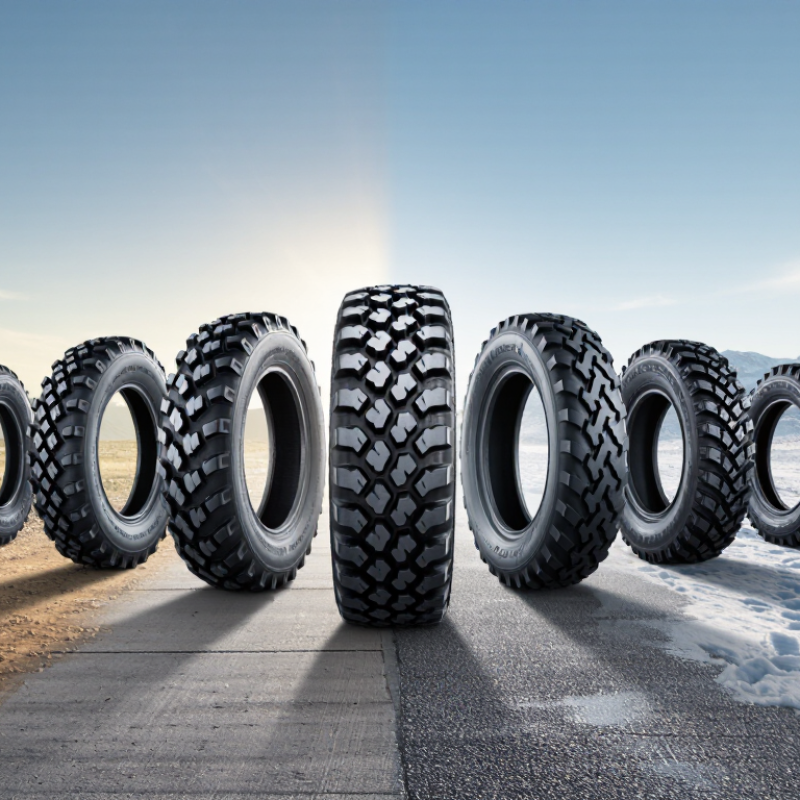
All-terrain tires are designed for drivers who move between paved roads, gravel tracks, mud, and light snow. Their tread uses larger, separated blocks to clear loose soil and maintain grip on uneven ground. Narrow grooves help channel water away from the contact patch. However, aggressive tread does not automatically mean better control.
A strong all-terrain tire balances several core features. Reinforced sidewalls can resist cuts from sharp stones, while a durable rubber compound supports longer service life. Tread depth matters, but tread design matters more. Look for stable center ribs, open shoulder blocks, and carefully shaped sipes. These details influence steering response, braking, and wet-road traction. A three-peak mountain snowflake rating can indicate tested performance in severe snow, although it cannot replace winter-specific equipment in extreme conditions.
Load rating and correct sizing deserve close attention. An overloaded tire may build excessive heat and wear unevenly. Check the vehicle placard, not a guess from online discussions. Maintain the recommended pressure when tires are cold, then inspect for cracking, embedded stones, and uneven shoulders. Rotation can improve wear, but it will not fix poor alignment.
There is always a compromise. More open tread can improve dirt traction but increase road noise and reduce fuel efficiency. A quieter tire may feel less confident in deep gravel. I once underestimated how quickly pressure changes affected steering on a rocky route. That mistake was useful. Real conditions often expose weaknesses that specifications do not show.
What Are the 7 Best All Terrain Tires in 2026? - Understanding All-Terrain Tires and Their Core Features
A practical comparison of seven all-terrain tire profiles for highway driving, gravel, mud, snow, towing, and off-road use.
| Rank | All-Terrain Tire Profile | Best Use | Common Vehicle Fitment | Typical Construction | Representative Size Range | Typical Tread Depth | Severe-Snow Rating | Core Strengths | Main Trade-Off | Overall Rating |
|---|---|---|---|---|---|---|---|---|---|---|
| 1 | Balanced Highway–Trail All-Terrain | Daily driving with regular gravel and moderate trail use | Crossovers, SUVs, and light-duty pickup trucks | Passenger or light-truck construction; usually 4-ply to 6-ply equivalent sidewall protection | Approximately 16–20 inch rim diameters; section widths commonly 215–285 mm | About 12/32–15/32 inch | Available in some sizes | Low road noise, stable wet-road handling, good fuel economy, predictable steering | Less resistant to sharp rocks and deep mud than heavier-duty designs | ★★★★★ |
| 2 | Severe-Snow All-Terrain | Mixed driving in areas with frequent snow and winter storms | SUVs, pickups, and four-wheel-drive utility vehicles | All-terrain casing with cold-weather rubber compound and snow-focused sipe pattern | Approximately 15–20 inch rim diameters; section widths commonly 215–285 mm | About 13/32–16/32 inch | 3PMSF available | Improved packed-snow traction, open shoulders, dependable wet braking, year-round usability | Can produce more noise and rolling resistance than highway-oriented tires | ★★★★★ |
| 3 | Rugged-Terrain All-Terrain | Drivers who frequently alternate between pavement, gravel, and rocky trails | Mid-size and full-size pickups, SUVs, and off-road vehicles | Light-truck construction with reinforced sidewalls and stone-ejecting tread features | Approximately 16–22 inch rim diameters; section widths commonly 235–325 mm | About 15/32–18/32 inch | Often available | Strong puncture resistance, confident loose-surface grip, durable tread blocks, good load support | Heavier weight, firmer ride, and more audible tread noise on highways | ★★★★☆ |
| 4 | Towing and Load-Focused All-Terrain | Frequent towing, hauling, and work-site access | Heavy-duty pickups, commercial vans, and utility trucks | Load Range E or equivalent heavy-duty casing; reinforced bead and sidewall structure | Approximately 16–20 inch rim diameters; section widths commonly 235–285 mm | About 15/32–18/32 inch | Size dependent | High load capacity, strong lateral stability, durable casing, improved resistance to trailer sway | Reduced comfort and efficiency when the vehicle is lightly loaded | ★★★★☆ |
| 5 | Mud-Ready All-Terrain | Wet trails, loose soil, ruts, and occasional mud crossings | Four-wheel-drive pickups, SUVs, and dedicated trail vehicles | Light-truck construction with wide grooves, open shoulders, and self-cleaning tread blocks | Approximately 16–20 inch rim diameters; section widths commonly 235–325 mm | About 15/32–18/32 inch | Less common | Strong forward traction in loose terrain, effective mud evacuation, reinforced shoulder edges | Longer wet-road braking distances and higher noise than road-biased designs | ★★★★☆ |
| 6 | Comfort-Oriented Crossover All-Terrain | Urban and highway use with occasional dirt roads or campsites | Compact crossovers, family SUVs, and all-wheel-drive vehicles | Passenger construction with flexible sidewalls and closely spaced tread blocks | Approximately 16–21 inch rim diameters; section widths commonly 215–275 mm | About 11/32–14/32 inch | Available in selected sizes | Quiet ride, strong wet-road manners, comfortable steering response, efficient everyday performance | Limited protection against sharp rocks, deep ruts, and repeated heavy impacts | ★★★★☆ |
| 7 | Maximum-Traction Expedition All-Terrain | Remote travel, rocky trails, sand, and extended off-road trips | Body-on-frame SUVs, pickups, and overland vehicles | Heavy-duty light-truck construction with three-ply sidewall protection in many sizes | Approximately 16–18 inch rim diameters; section widths commonly 235–315 mm | About 16/32–19/32 inch | Size dependent | Excellent sidewall durability, strong low-speed traction, robust casing, stable performance at reduced pressures | Highest weight, noise, rolling resistance, and pavement wear among the profiles listed | ★★★★☆ |
Note: Specifications are representative ranges for comparable all-terrain tire designs. Actual size availability, load rating, tread depth, winter certification, and sidewall construction vary by tire size and vehicle application.
Related Posts
-
How to Choose Premium All Terrain Tires in 2026?
-
Best Premium All Terrain Tires for 2026 What to Know?
-
How to Choose the Best All Terrain Tyres?
-
Maximize Your Adventure: The Ultimate Guide to Choosing Off Road Tires for Every Terrain
-
Top 10 Off Road Snow Tires for Winter Driving
-
How to Choose Premium Traction Tires for Your Vehicle?