How to Choose the Best All Terrain Tyres?
Choosing the best all terrain tyres requires more than comparing tread patterns or advertised mileage. These tyres must balance highway stability, wet braking, gravel traction, comfort, and resistance to sidewall damage. A rugged appearance can be misleading. Real performance depends on construction, compound, load rating, speed rating, and vehicle compatibility.
The National Highway Traffic Safety Administration reported 738 fatalities in tyre-related crashes in its 2017 Traffic Safety Facts report. That figure reinforces a practical point: tyre selection is a safety decision, not merely a styling choice. The U.S. Tire Manufacturers Association also stresses correct inflation, regular inspections, and appropriate replacement practices. These recommendations matter on ordinary roads, where underinflation can create heat, uneven wear, and slower steering response. Check the pressure when tyres are cold. Inspect the shoulders after driving over sharp stones. Small details reveal larger problems.
Professional testing should guide the final choice. The European Tyre and Rim Technical Organisation provides technical standards for dimensions, load capacity, and service performance. European tyre labels also offer comparable information about wet grip, rolling resistance, and external noise. However, laboratory ratings cannot fully represent deep sand, mud, snow, or rocky trails. No tyre is perfect.
A sensible evaluation begins with your actual driving pattern. Drivers covering mostly asphalt may prefer quieter all terrain tyres with strong wet-road performance. Frequent trail users may accept more noise for reinforced sidewalls and deeper voids. Review independent tests, manufacturer specifications, and warranty conditions carefully. Then match the tyre to the vehicle’s axle load, driving climate, and expected terrain. The best choice is not always the most aggressive-looking option.
Define Your Terrain Mix and Target a 50/50 On-Road-Off-Road Balance
How to Choose the Best All Terrain Tyres?
A 50/50 tyre suits drivers who divide their week between tarmac and loose surfaces.
Define that split honestly. A gravel driveway is not the same as deep mud. Count your real journeys, not your weekend ambitions.
The U.S. Department of Energy reports that fuel economy can fall by about 0.2% for every 1 psi of underinflation.
A tougher tread still needs accurate pressure.
On-road performance should remain measurable.
Check wet braking, handling stability, cabin noise, and rolling resistance.
Independent tests from consumer motoring organisations often show that aggressive tread patterns increase noise and reduce road refinement.
That trade-off may be acceptable on rocky tracks, but tiring during a 500-mile motorway trip.
Look for a tyre with reinforced sidewalls, strong puncture resistance, and a severe-snow rating
if winter conditions are common.
Off-road capability depends on more than tread depth.
Examine void spacing, shoulder blocks, casing protection, and sidewall flexibility.
The Tire Industry Association’s training guidance stresses correct tyre selection, inflation, and regular inspection for mixed-use vehicles.
Inspect between the grooves after driving over sharp stones.
I have learned that “all terrain” can encourage overconfidence.
It does not guarantee traction in clay, sand, or standing water.
A 50/50 target is useful, but your local weather, payload, and driving habits may justify a
60/40 compromise.
Match Load Range and Load Index to Your Vehicle’s Maximum Axle Weight
When choosing all-terrain tyres, start with the door-jamb placard, not an online size chart. It states the vehicle’s GAWR, or maximum permitted weight on each axle, plus cold inflation pressure. The 2024 Tire and Rim Association Year Book provides load-and-inflation tables for matching tyre capacity to pressure. If the front GAWR is 2,400 kilograms, two tyres need at least 1,200 kilograms each under ideal distribution. Real roads are less polite. Cargo can shift, and a pothole can load one side harder.
A tyre’s load index is a coded capacity at its specified pressure. Index 100 represents 800 kilograms, or 1,764 pounds, according to the standard load-index table. That figure is not permission to exceed the axle rating. NHTSA’s Tire Safety Information advises following the vehicle placard and avoiding overloads. Choose an index that meets or exceeds the original specification, while preserving the listed pressure range.
Load range describes a strength and inflation category, not a literal ply count. In common convention, C, D, and E correspond roughly to 6-, 8-, and 10-ply ratings. Modern casings may use fewer physical plies. So the label can mislead. It is easy to assume “E” is always safer for an SUV, but extra stiffness may reduce comfort and grip when lightly loaded. Check the tyre’s capacity table, wheel rating, clearance, and actual axle weights from a certified scale. A quick calculation can still miss real-world loading.
How to Choose the Best All Terrain Tyres? - Match Load Range and Load Index to Your Vehicle’s Maximum Axle Weight
| Load Range |
Common Maximum Inflation Pressure* |
Example Load Index |
Load Capacity per Tyre |
Capacity per Axle
(Two Tyres) |
Suitable Maximum Axle Weight |
Typical Use |
| C / 6PR |
Up to approximately 50 psi |
104 |
900 kg |
1,800 kg |
Up to 1,800 kg |
Light-duty SUVs, pickups and vans |
| C / 6PR |
Up to approximately 50 psi |
106 |
950 kg |
1,900 kg |
Up to 1,900 kg |
Medium-duty SUVs and pickups |
| D / 8PR |
Up to approximately 65 psi |
109 |
1,030 kg |
2,060 kg |
Up to 2,060 kg |
Heavier SUVs and utility pickups |
| D / 8PR |
Up to approximately 65 psi |
113 |
1,150 kg |
2,300 kg |
Up to 2,300 kg |
Heavy-duty SUVs and loaded pickups |
| E / 10PR |
Up to approximately 80 psi |
115 |
1,215 kg |
2,430 kg |
Up to 2,430 kg |
Work-oriented pickups and vans |
| E / 10PR |
Up to approximately 80 psi |
121 |
1,450 kg |
2,900 kg |
Up to 2,900 kg |
High-load commercial-style applications |
How to match the tyre to your vehicle:
Identify the vehicle’s front and rear Gross Axle Weight Rating (GAWR) on the certification label, owner’s manual or manufacturer documentation. Divide each axle rating by two, then select an all terrain tyre whose load index capacity per tyre is at least that value. The tyre’s load range must also be compatible with the vehicle’s required tyre specification and inflation pressure.
Calculation example:
For a maximum axle weight of 2,200 kg, each tyre must support at least 1,100 kg. Load index 113 provides 1,150 kg per tyre, giving a two-tyre axle capacity of 2,300 kg. Load index 111 provides 1,090 kg per tyre and would not meet this axle requirement.
*Load range and pressure values are common industry conventions for light-truck tyres. Actual load capacity depends on tyre size, construction, load index, speed rating and inflation pressure. Always follow the vehicle placard, tyre sidewall markings and applicable local regulations. Do not exceed the lower of the tyre or vehicle axle rating.
Compare Tread Depth, Void Ratio, and Sidewall Protection for Real Terrain
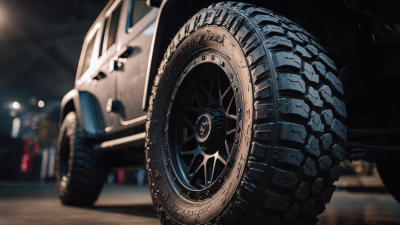
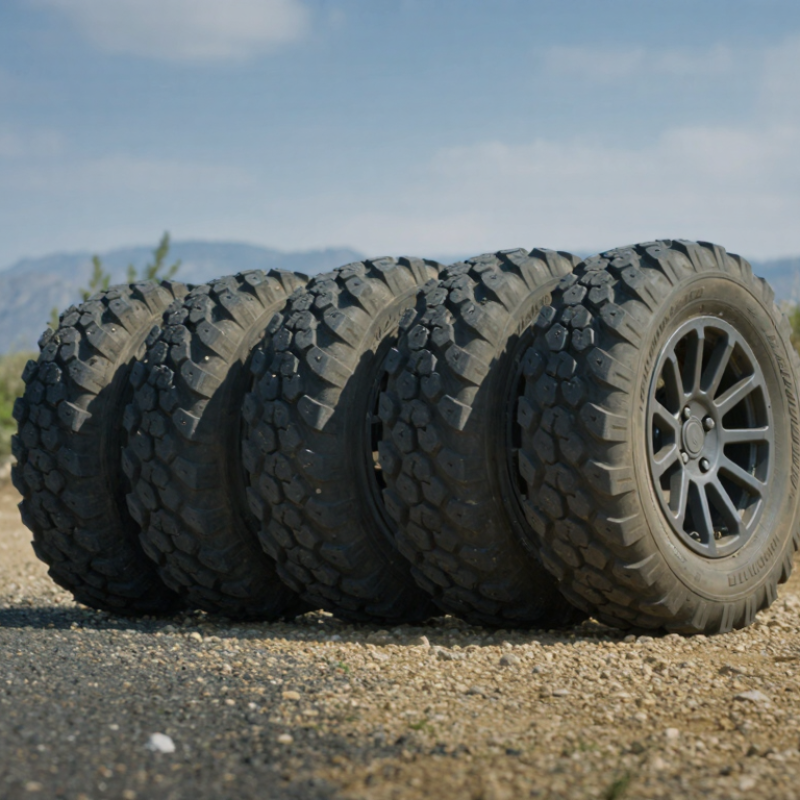
Choosing all terrain tyres starts with the ground you actually drive on, not the most aggressive-looking pattern. On loose gravel, deeper tread can improve bite and clear stones. However, extreme depth may feel vague on wet roads. I look for a balanced tread depth that supports traction without sacrificing steering control. It matters.
Void ratio shows how much open space surrounds each tread block. A higher ratio helps mud escape and lets gravel move away from the contact patch. Yet, large gaps can create more road noise and reduce stability on smooth surfaces.
For mixed routes, moderate void spacing is often more predictable. Check the shoulders too. Open shoulder grooves can add grip when a tyre reaches soft edges or ruts.
Sidewall protection deserves careful inspection. Reinforced sidewalls can resist cuts from sharp rocks, roots, and broken trail surfaces. They do not make a tyre indestructible. Lowering pressure may improve comfort and traction, but excessive deflection can damage the sidewall or rim. Use the vehicle maker’s guidance, then adjust cautiously for terrain and load. I have seen drivers focus on tread and ignore this area. That choice can be costly.
Read the tyre’s load rating and construction details before buying. Compare actual routes, seasonal weather, braking needs, and highway mileage. A tyre designed for deep mud may be disappointing during long motorway trips. There is no perfect pattern. Recheck wear after several weeks, because uneven blocks can reveal alignment or pressure problems before they become serious.
Check Tyre Size, Speed Rating, Noise, and Rolling Resistance Before Buying
Choosing the best all terrain tyres starts with the correct size. Check the vehicle placard, owner’s manual, and current tyre markings before shopping. A wider or taller tyre may look tougher, but it can affect steering, clearance, and speedometer accuracy. The load index also matters, especially for vehicles carrying tools, passengers, or camping equipment. I once underestimated this detail. The tyres fitted well, yet the ride felt noticeably heavier.
Match the speed rating to your vehicle’s requirements, even if off-road driving rarely reaches that limit. A suitable rating supports predictable handling during sudden braking or wet motorway travel. Noise deserves attention too. Aggressive tread blocks can sound like a steady hum on smooth asphalt. Rolling resistance is equally practical. Higher resistance may reduce fuel efficiency, while a quieter, more efficient tyre might offer less grip in loose mud. No option wins everywhere. Check independent test data and ask a qualified tyre technician about your usual roads, climate, and load.
Tips: Compare the same size and load rating when reading reviews. Listen during a test drive with the windows closed. Measure tread depth after several trips. Your first choice may need reconsideration. There is no perfect compromise.