How to Find the Best Tire Shop in China?
Choosing the right tire shop in China takes more than comparing prices on a screen. A good shop should match your vehicle’s tire size, explain suitable options, and show you the work before installation. Look for clear service details, recent customer feedback, and staff who answer practical questions without pressure. Small signs matter. Are the tire specifications easy to read? Does the technician check wheel balance and explain whether alignment is needed?
Tire-service consultant Li Wei offers a useful standard: “A trustworthy shop explains the work before the wheels leave the car.” Use that idea when comparing local shops, whether you are in Shanghai, Chengdu, or a smaller city. Ask about tire availability, installation costs, balancing, warranty terms, and appointment times. If your car has a tire-pressure monitoring system, confirm that the shop can handle it. A tidy waiting area is reassuring, but it proves little on its own.
This guide outlines how to check a tire shop’s expertise, equipment, pricing, and after-service support. It also considers how to compare online listings with what you see in person. One imperfect lesson is worth remembering: the cheapest quote can leave important services unclear. Ask for an itemized estimate before approving work. Then compare the answers, not just the numbers. A careful choice may take a few extra minutes. Better to ask one more question.
Understanding Your Tire and Vehicle Service Needs
Before choosing a tire shop in China, identify how your vehicle is actually used. Daily city traffic, long highway trips, rough roads, and frequent heavy loads place different demands on tires. Check the size printed on the tire sidewall, your vehicle manual, and the current tread condition. Look for uneven wear, cracks, bulges, or a slow pressure loss. Small details matter. A shop should explain whether you need a repair, replacement, balancing, or an alignment check—and show you the measurements behind its advice.
Ask how the shop checks pressure and tread, and whether it records the work performed. The U.S. Department of Energy’s fuel-economy guidance estimates that each 1 psi drop in the average pressure of all tires can reduce fuel economy by about 0.2%. That makes a pressure check more than a formality.
NHTSA also advises checking tire pressure at least monthly, using the vehicle maker’s recommended pressure rather than the maximum printed on the tire. Ask for measurements. A clear answer matters more than a confident sales pitch, though I would still compare the recommendation with your manual. It is easy to overlook the spare tire or forget that a vehicle’s usual load has changed.
Finding Tire Shops in Your Area
Finding Tire Shops in Your Area
Start with a map search using your district or a nearby landmark, not just “tire shop.” China’s Ministry of Public Security reported 353.45 million registered automobiles at the end of 2024. That scale makes distance and service availability practical concerns, especially in busy urban districts. Check whether a shop handles your tire size and offers services such as puncture repair, balancing, or alignment. A nearby shop is useful only if it can do the job.
Check several listings, then call before driving over. Ask about current stock, fitting fees, opening hours, and how long installation usually takes. Read recent reviews for specific details: customers mentioning clear quotes or careful work are more helpful than vague praise. A map pin is only a starting point. Online ratings can be stale, and I would not treat them as proof.
The China Association of Automobile Manufacturers reported 31.436 million vehicle sales in 2024, a reminder that local service demand can be high. Ask for an itemized quote and confirm whether balancing is included. If the answers feel rushed, compare another nearby shop. It takes a few extra minutes. Availability can change, so verify it on the day.
Checking Shop Credentials, Equipment, and Tire Selection
Choosing a tire shop in China starts with checking who will handle the work. Ask whether technicians have relevant training and whether the shop can explain its service process clearly. A professional shop should inspect tire size, load rating, and vehicle requirements before recommending a replacement. Check that written quotes list the tire specifications, fitting, balancing, and any extra charges. Clear answers matter.
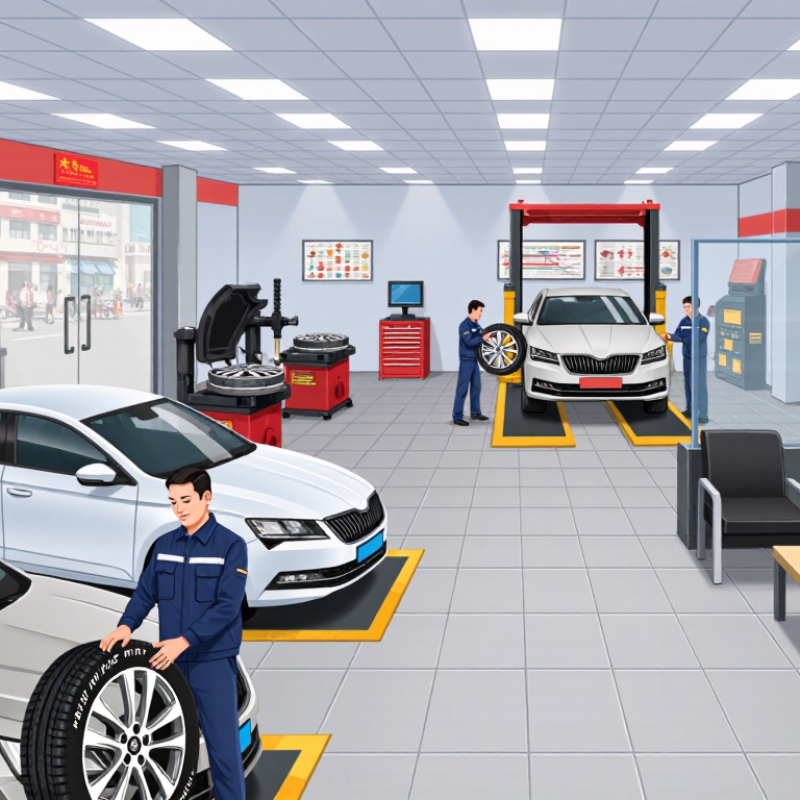
Look at the equipment, not just the waiting room. Ask whether the shop uses a tire changer and wheel balancer suited to your vehicle, and whether staff inspect wheels for damage before fitting. The right tire depends on your usual roads, climate, driving habits, and budget. Compare the sidewall details with your vehicle manual, and ask how the shop checks inflation after installation. It is easy to overvalue a spotless floor; appearance alone proves little. If an explanation feels rushed, pause and ask again.
Tips: Bring your vehicle manual or a photo of its tire-pressure label. Request the proposed tire size in writing, then check it before work begins. Ask to see the old tire’s wear pattern; uneven wear may point to alignment or suspension issues, not just tire age.
How to Find the Best Tire Shop in China
Use this practical checklist to compare tire shops. The chart counts the checks in each category; it is a checklist guide, not survey data or a rating of specific shops.
What to check: Credentials—business registration, a clear service invoice, and warranty terms. Equipment—an appropriate tire changer, wheel balancer, calibrated torque wrench, and safe lifting equipment. Tire selection—correct size, load and speed ratings, production date, and visible condition. Transparency—written pricing, installation details, and a clear explanation of any recommended extra work.
Comparing Prices, Warranties, and Customer Feedback
How to Find the Best Tire Shop in China?
Compare the full price, not just the number shown in an online listing. Ask whether the quote includes fitting, wheel balancing, new valves, and disposal of old tires. Request an itemized estimate before booking. Details matter. A shop with a slightly higher price may offer clearer service and fewer surprise charges, but that is not guaranteed.
Read the warranty terms carefully. Check what is covered, how long coverage lasts, and whether labor is included if a tire needs attention. Ask for the terms in writing, and keep the receipt. Customer feedback can reveal useful patterns: look for recent comments about appointment times, installation quality, and how staff handle complaints. One glowing review proves little. Repeated reports of uneven balancing or unclear charges deserve a closer look. Photos and thoughtful replies can help, though online reviews are not always complete or fair. A useful check is to call the shop with one specific question and notice whether the answer is clear. I would not choose by rating alone; it is an easy shortcut, and sometimes the wrong one.
Confirming Service Details and Choosing a Shop
A good tire shop should explain the work before lifting your car. Ask staff to confirm your tire size, load and speed ratings, and availability in writing. Clarify whether the quoted price includes fitting, balancing, valve replacement, alignment checks, and disposal of old tires. A low price can hide extra charges. Ask how technicians tighten wheel nuts and set pressure, then request an itemized receipt and warranty terms.
Check the shop’s equipment and work area. A calibrated pressure gauge, a balancing machine, and clean mounting tools are practical signs of care. Ask whether the technician will inspect the wheels for damage and set pressure to the vehicle’s door-label specification, not the tire’s maximum sidewall value. The U.S. Department of Energy’s FuelEconomy.gov guidance estimates that fuel economy drops about 0.2% for every 1 psi drop in average tire pressure. Small details matter. Still, a polished waiting room alone does not prove careful workmanship.
Tips: Photograph your current tires and the door-label pressure before visiting. Compare two written quotes, and ask each shop to explain any difference. If an answer feels vague, pause and ask again. That extra minute can prevent an inconvenient return visit.