How to Choose the Right Vehicle Tires?
Choosing vehicle tires is not a styling decision. It affects braking, handling, ride comfort, fuel use, and confidence when rain darkens the road. Tire Rack product specialist Woody Rogers is often associated with a useful principle: “Choose tires for your vehicle, your climate, and the way you drive—not appearance alone.” Treat that as a practical summary, not a verified verbatim quotation.
Start with the tire size and load rating listed in your owner’s manual or on the driver-side door placard. Then consider where you drive. A commuter crossing wet city streets needs different strengths from a driver facing frequent snow or long highway trips. Check the tire’s tread pattern, temperature and traction grades, and manufacturer guidance. Small details matter. So does proper inflation.
This guide will explain how to compare all-season, summer, and winter options, read tire markings, and balance price against expected performance. It will also cover common mistakes, such as choosing a tire by brand alone or overlooking load requirements. A premium tire is not automatically the best fit. The right choice depends on your vehicle, local conditions, and priorities. Even careful comparisons have limits: ratings cannot perfectly predict how every tire will feel on every road. Use them as evidence, not a promise.
Identify Your Vehicle’s Tire Specifications
Before comparing tires, identify the specifications approved for your vehicle. Check the tire-information placard, usually inside the driver’s door, and confirm details in the owner’s manual. The placard lists the original tire size and recommended cold pressure. Numbers matter.
A size such as 225/60R17 describes several key dimensions: width, sidewall profile, construction, and wheel diameter. The sidewall also shows a load index and speed rating. Match these ratings to the vehicle’s requirements; choosing a tire with a lower rating may affect safe handling and load capacity. If the placard and manual seem to differ, ask a qualified tire professional to verify the correct fitment.
Pay attention to pressure, too. The figure on the placard is the vehicle’s recommended pressure when tires are cold, not the maximum pressure printed on a tire’s sidewall. It is easy to overlook this distinction while reading several rows of numbers. Check the spare’s specifications separately, since it may use a different size and pressure. If the vehicle has nonstandard wheels or a modified suspension, standard fitment information may not tell the whole story.
Understand Tire Types and Their Intended Uses
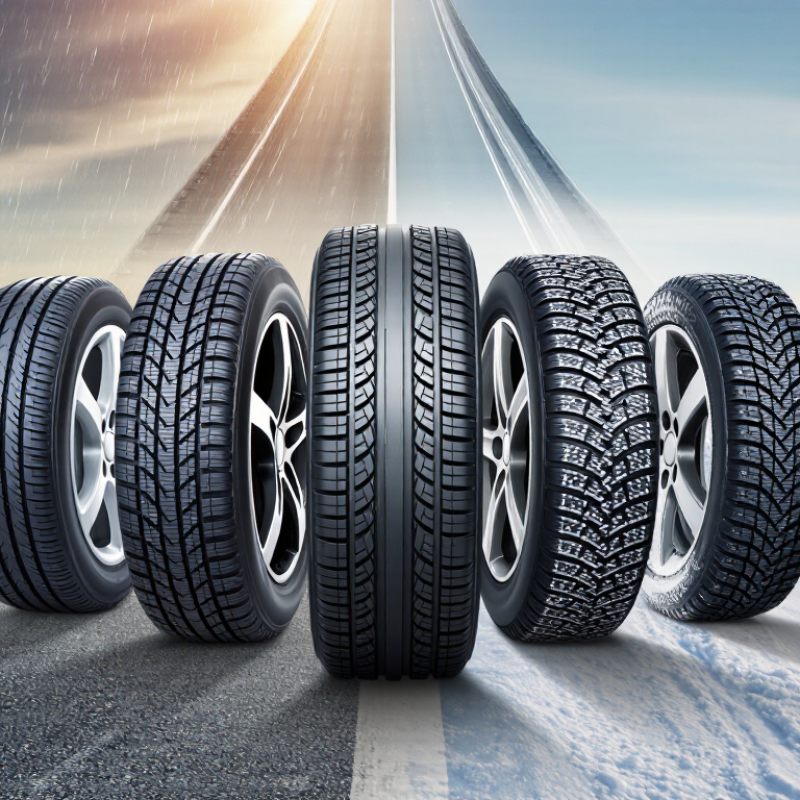
Tire type should match the weather, roads, and load your vehicle actually faces. All-season tires suit moderate climates and everyday driving, but they are not a substitute for dedicated winter tires in frequent snow or ice. Winter tires use cold-flexible rubber and deeper grooves to maintain grip in low temperatures. Snow changes everything. Summer tires prioritize warm-weather handling and wet-road performance; their compounds can stiffen in cold conditions. All-terrain tires add tougher tread for gravel and rough tracks, often with more road noise and rolling resistance on pavement. I’d pause at the label: “all-season” sounds broader than it is.
Check the vehicle placard for the specified tire size and load rating before comparing tread patterns. A touring tire may make sense for quiet highway commuting, while a winter set can help where temperatures stay low for long periods. The U.S. Department of Energy’s FuelEconomy.gov guidance says proper inflation improves fuel economy by about 0.6% on average, and up to 3%. That figure concerns pressure, not tire type, but it shows why matching and maintaining tires matters. NHTSA’s Tire Safety guidance also recommends regular pressure and tread checks. Fit matters. Your route, climate, and driving habits may point in different directions, so treat category labels as a starting point—not a guarantee.
Compare Tire Sizes, Ratings, and Performance Features
Choosing tires starts with the size printed on the vehicle placard or in its manual. A marking such as 225/60R17 gives the tire’s width, sidewall proportion, construction, and wheel diameter. Match these figures carefully; a tire that appears to fit may still affect handling or clearance. Small differences matter.
Compare the load index and speed rating with the vehicle’s requirements, not just the tire size. The load index indicates carrying capacity, while the speed rating describes a tire’s tested speed capability under specified conditions. Do not assume a higher number automatically means a better everyday tire. Check the vehicle guidance, especially if it carries heavy loads or frequently travels on highways.
Performance features should fit the roads and weather you actually encounter. A directional tread may help channel water, while a softer compound can improve cold-weather grip but wear faster in warm conditions. Look for independent wet-braking and wear information where available, and compare rolling resistance and noise ratings too. Labels need context. Test methods can differ, and a quiet tire may feel less responsive on a winding road. Think about a familiar drive: rain-dark pavement, a rough seam in the road, or a full trunk can change which trade-offs matter most. I’d still recheck the ratings; tire charts are easy to misread.
Match Tire Characteristics to Your Driving Conditions
Choosing tires is less about finding a “best” option than matching their characteristics to your daily conditions. A city commute with frequent stops needs predictable braking and comfortable handling. On rough roads, tougher construction and suitable load capacity may matter more. Start with your routes. Wet streets, gravel shoulders, and long highway stretches each place different demands on a tire.
In rainy areas, look for dependable wet-road grip and inspect tread depth regularly; worn tread can reduce water evacuation. For regular snow and freezing temperatures, use tires designed for those conditions, and change them when the season shifts. All-season tires can suit moderate climates, but they are not a substitute for dedicated winter tires in persistent severe cold. Check the vehicle manual or door-jamb placard for approved size and load ratings. Guessing from appearance is a poor shortcut.
Think about comfort, too. Some tread patterns produce a noticeable hum on smooth pavement, while a softer ride may matter on long commutes. Compare the tire’s stated ratings, but treat them as guidance, not a promise for every road. I may be giving comfort too much weight; safety and fit come first. Check pressure when the tires are cold, and have uneven wear inspected. Small habits matter.