
Why Choose Scuter Electric Scooter for Global Buyers?
Urban transport is changing at street level. The International Energy Agency’s Global EV Outlook 2024 reports that electric two- and three-wheelers already represent more than half of global sales. This matters because short trips often need less battery capacity, less road space, and lower operating costs than car journeys.
Market forecasts also show strong momentum. Fortune Business Insights estimates that the global electric scooter market will continue expanding through 2030, although forecasts differ by region and research method. That difference deserves attention. Adoption depends on charging access, road conditions, after-sales service, and local safety requirements. A scooter that performs well on smooth European streets may struggle on uneven roads in Southeast Asia or Latin America.
Scuter Electric Scooter is positioned for buyers who need practical mobility, not just attractive specifications. A commuter may value reliable braking, visible lighting, and a removable battery more than an impressive top-speed figure. A distributor may focus on spare-parts availability, warranty support, and stable supply.
Horace Dediu, a leading micromobility analyst, once described the sector as “the biggest disruption in transportation in 100 years.” The statement sounds bold. It may also be slightly premature. Still, the evidence is difficult to ignore. Buyers now compare range, durability, certification, and total ownership cost more carefully. Scuter Electric Scooter can become a credible global choice when those details are tested honestly, documented clearly, and supported after purchase. Performance claims should remain realistic. Trust is built on ordinary rides, repeated every day.
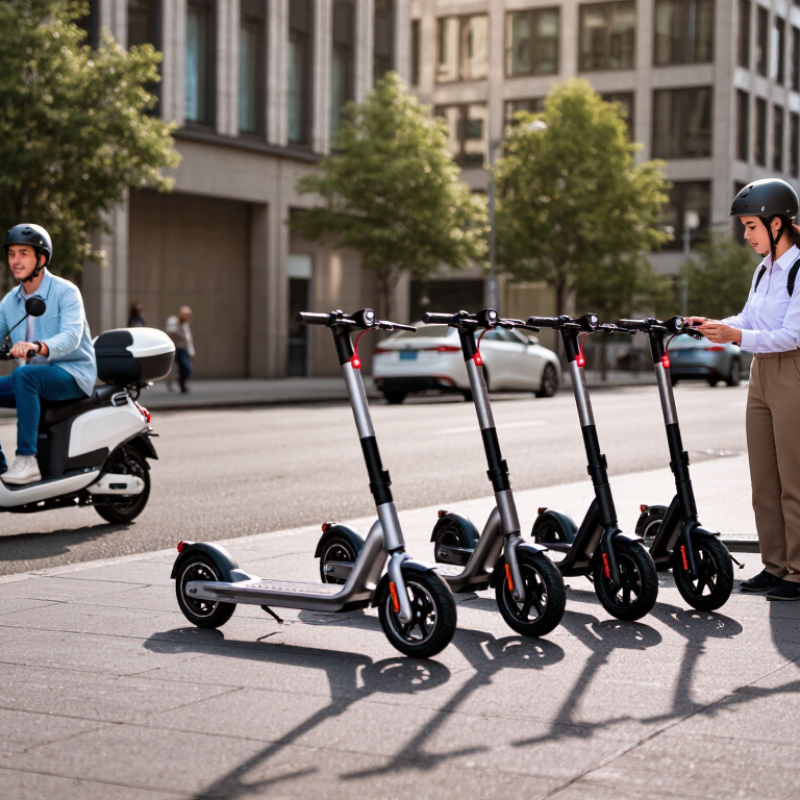
Scuter Electric Scooter: Brand Background and Product Positioning
The brand background behind this electric scooter line is rooted in practical urban travel. Its development appears focused on short commutes, campus rides, and compact city routes. The product is not positioned as a high-performance machine. It is designed for everyday movement, where easy handling matters more than extreme speed.
In real use, riders usually care about details they can feel immediately. A stable deck helps during slow turns. Responsive brakes add confidence near crossings. A readable display reduces distraction in traffic. The folding structure also matters when the scooter enters an elevator or rests beneath a desk. These features suggest a product position between basic personal transport and premium urban mobility. That middle ground can suit global buyers with different riding habits.
Still, positioning is not proof of performance. Marketing language may sound broader than real road conditions. Battery range can change with rider weight, temperature, hills, and tire pressure. Buyers should review local requirements, charging compatibility, spare-part access, and warranty terms before ordering. Check the brakes carefully. Test the folding latch. Read the technical sheet, not only the product photos. This careful approach supports a more reliable purchase decision, although no scooter fits every city or rider perfectly.
Why Choose Scuter Electric Scooter for Global Buyers? - Scuter Electric Scooter: Brand Background and Product Positioning
| Evaluation Dimension | Representative Market Data | Value for Global Buyers |
|---|---|---|
| Primary Use Case | Short-distance urban commuting, last-mile travel, campus mobility, and leisure riding | Supports flexible transportation where conventional cars are inefficient for short trips |
| Typical Product Positioning | Portable personal electric vehicle positioned between walking, cycling, and low-speed urban transport | Offers a practical balance of portability, operating cost, and travel speed |
| Common Maximum Speed Range | Approximately 20–32 km/h for many consumer-oriented models; local legal limits may be lower | Buyers should match vehicle settings and documentation with the destination market’s road rules |
| Typical Advertised Range | Approximately 20–60 km per charge, depending on battery capacity, rider weight, speed, temperature, terrain, and riding mode | Range claims should be evaluated under clearly stated test conditions rather than as a single guaranteed distance |
| Battery Technology | Rechargeable lithium-ion battery packs are widely used because of their high energy-to-weight ratio | Battery certification, transport documentation, protection circuitry, and replacement availability are key purchasing factors |
| Charging Time | Common charging periods are approximately 4–8 hours, depending on battery capacity and charger output | Overnight charging can support daily commuting, while removable batteries can improve convenience |
| Motor Configuration | Hub motors are common; output levels frequently range from approximately 250 W to 800 W for consumer products | Motor output should be selected according to rider weight, gradients, climate, and local power regulations |
| Braking System | Mechanical or electronic braking is common; disc brakes generally provide stronger heat management than basic friction systems | Dual braking and progressive control are important for wet roads, slopes, and frequent urban stops |
| Tire and Ride Comfort | Solid tires reduce puncture risk; pneumatic tires generally provide better shock absorption but require pressure checks | Tire selection should reflect road quality, maintenance preferences, and expected riding distance |
| Weather Resistance | Ingress protection ratings vary by model; an IP rating describes resistance to solids and water under defined test conditions | A stated and verifiable IP rating helps buyers assess suitability for rain and outdoor storage |
| Portability | Foldable designs commonly weigh about 12–25 kg, although performance-oriented models may be heavier | Weight, folded dimensions, and lifting points should be checked before selecting a product for mixed-mode travel |
| Safety and Compliance | Requirements differ by country and may cover electrical safety, electromagnetic compatibility, battery transport, speed, lighting, and road use | Compliance documents and market-specific configurations reduce import, registration, and distribution risks |
| Operating Cost | Electricity consumption is generally low compared with petrol-powered transport; tires, brakes, and batteries remain routine replacement items | Low energy use can support economical daily mobility when maintenance and battery replacement are planned |
| Global Buyer Checklist | Verify local speed limits, road-use eligibility, charger compatibility, battery shipping requirements, spare parts, warranty terms, and after-sales support | A complete pre-purchase review improves product-market fit and helps avoid unexpected compliance or service costs |
Note: Specifications and legal requirements vary by product configuration and destination market. Buyers should confirm current local regulations and official technical documentation before purchase or import.