
Choosing Eva Boat Deck Flooring is more than comparing colors or advertised prices. A deck must handle wet feet, salt spray, sun exposure, and repeated cleaning. The right material can improve comfort and grip while giving a boat a cleaner finish. But performance varies by foam density, surface texture, thickness, and adhesive quality. Small details matter.
This guide introduces manufacturers and suppliers serving different regions, then explains what buyers should compare before requesting a quote. Look for clear product specifications, available sheet sizes, customization options, and practical installation guidance. Ask whether samples are available. Check how the surface feels underfoot and whether the backing suits your deck material. A polished website is not enough evidence. Request technical documents and verify that performance claims apply to the exact product being offered.
Manufacturing capacity, communication, lead times, and after-sales support also shape a reliable purchase. Some suppliers focus on custom-cut patterns; others offer standard sheets for simpler projects. Neither approach is automatically better. A low price can be attractive, but it may leave questions about consistency or service unanswered. Those trade-offs deserve a closer look. The manufacturers discussed here should be treated as options to evaluate, not as a universal ranking. Boat type, climate, installation skill, and budget all affect the best choice. Compare the details carefully before deciding.
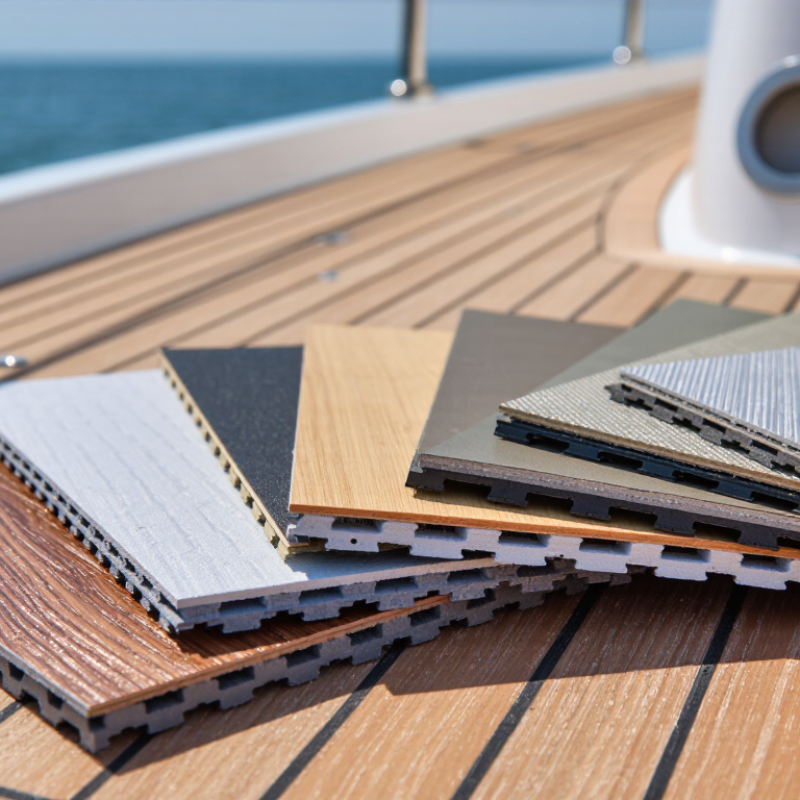
EVA boat deck flooring is a closed-cell foam surface fitted over suitable deck areas. It is usually supplied in textured sheets or custom-cut panels, often with an adhesive backing. The foam adds cushioning underfoot and can improve grip when the surface is wet. It is commonly used on fishing boats, pontoons, personal watercraft, and cockpit steps. Some owners also fit it around seating or casting areas. It feels softer than bare fiberglass, though it is not a cure-all for slippery conditions.
Tips: Clean and dry the deck before installation. Check that the surface is sound and free from wax or oil. Choose a texture that suits bare feet and frequent use. Rinse away salt, fish residue, and grit; trapped dirt can wear the surface. Inspect edges and seams from time to time. Small gaps matter.
EVA foam can reduce the impact of dropped gear, but sharp hooks and dragged equipment may still mark it. Sunlight, heat, and cleaning methods can affect its appearance over time, so follow the flooring maker’s care guidance. I would not assume every foam panel suits every deck. Curves, drainage channels, and existing coatings can complicate fitting. A careful template helps, but even a neat installation may need adjustments. The best choice depends on how the boat is used, not just how the deck looks in a product photo.
EVA (ethylene-vinyl acetate) boat decking is a cushioned foam surface commonly used in working and recreational areas aboard boats. The chart marks typical installation locations; it does not represent market share or usage frequency.
Typical locations include cockpits, swim platforms, bow seating areas, side decks, fishing areas, and steps. EVA decking is a surface covering, and traction depends on the product texture, installation, and care.
EVA boat deck flooring begins with a careful survey of the deck. Designers measure curves, hatches, seat bases, and drainage channels, then create a template from the actual surface. Digital models help check panel layout and reduce waste. Yet a clean drawing is not enough. Older boats may have uneven surfaces that templates do not capture perfectly.
Material choice shapes comfort and durability. Closed-cell EVA foam is commonly selected because it resists water absorption and feels softer underfoot than bare fiberglass. Thickness, firmness, and surface texture are balanced for the boat’s use. Deeper grooves can improve grip and guide water, but they may collect dirt. There is no perfect pattern.
In manufacturing, foam sheets are cut to the approved shapes, often with computer-controlled equipment. Decorative layers and beveled edges may be added before adhesive backing is applied. Small details matter. Poorly aligned panels can expose edges or interfere with hatches. Quality checks should confirm dimensions, bonding, and clean cuts. Installers also need a dry, clean deck; dust or wax can weaken adhesion. This step is easy to rush. A test fit can reveal awkward seams before the backing is peeled away.
Selecting an EVA boat-deck flooring manufacturer takes more than comparing colors and quoted prices. Ask how the material performs after repeated exposure to sunlight, saltwater, sunscreen, and wet footwear. Request test reports that identify the sample, test method, and conditioning period. A single “slip-resistant” claim is not enough. Your crew needs to know what was tested, and under which conditions.
Grand View Research estimated the global ethylene-vinyl acetate market at about US$11.6 billion in 2023, with projected annual growth of 5.3% from 2024 to 2030. That report covers EVA broadly, not marine decking specifically; it signals material scale, not product quality. For a boat-floor supplier, ask for evidence on UV aging, color stability, water absorption, adhesive performance, and dimensional change. Small details matter. Check whether the backing bonds evenly to a clean, curved panel, and whether cut edges stay neat around hatches. Request production-lot traceability and clear installation guidance, too. Compare warranties carefully: exclusions can matter as much as the headline term. I would still test a sample on deck. Lab data helps, but real surfaces can surprise you.
Use this scorecard to compare suppliers consistently. The weights are suggested evaluation priorities, not market rankings or claims about any specific manufacturer. Request product-specific evidence and assess samples under conditions representative of your vessel.
| Evaluation factor | Suggested weight | What to assess | Evidence to request | Practical evaluation |
|---|---|---|---|---|
| Material composition and consistency | 15% | Confirm the product is an EVA-based foam and review density, thickness, hardness, surface texture, and batch-to-batch tolerances. | Technical data sheet, product specification, and documented quality-control tolerances. | Compare samples from different production batches for thickness, feel, finish, and dimensional consistency. |
| Wet-surface traction and comfort | 15% | Assess grip when wet, underfoot cushioning, and surface texture for the intended footwear and deck use. Traction can vary with water, contamination, wear, and test conditions. | Test results that identify the method, test surface, wetting conditions, and specimen; ask whether results apply to the offered finish. | Evaluate a secured sample in safe, controlled wet and dry conditions relevant to the application. |
| UV, weather, and saltwater durability | 15% | Review resistance to sunlight, heat, moisture, saltwater exposure, and expected outdoor service conditions. Accelerated aging results do not by themselves establish a precise service life. | Product-specific aging or exposure reports, including test conditions, duration, and observed changes in color, flexibility, and surface condition. | Compare exposed and unexposed samples and ask for documented field-use references for similar environments. |
| Adhesive compatibility and bond performance | 15% | Check compatibility with the intended deck substrate, surface preparation, adhesive system, temperature range, and exposure to water and heat. | Installation instructions, recommended adhesive information, substrate limitations, and bond-test details for the specified assembly. | Install a trial piece using the proposed preparation and adhesive; inspect edges and bond after the stated cure and exposure conditions. |
| Dimensional stability and workmanship | 10% | Evaluate cutting accuracy, thickness uniformity, edge quality, engraving or texture consistency, and changes in dimensions with heat or moisture. | Dimensional tolerances, inspection records, sample drawings, and any relevant product-specific stability test results. | Check sample measurements and fit against a template or drawing before approving a production order. |
| Cleaning and chemical resistance | 10% | Confirm routine cleaning requirements and compatibility with the cleaners, oils, and other substances likely to contact the deck. | Care instructions and product-specific compatibility information; identify substances that may stain, soften, or damage the foam. | Test only with approved cleaning products and follow the supplier's instructions; inspect for staining, tackiness, or surface change. |
| Manufacturing quality and traceability | 10% | Assess documented inspection procedures, control of incoming materials, production consistency, and the ability to trace supplied batches. | Quality-management documentation, inspection records, batch identification practices, and corrective-action process. | Confirm the supplier can provide consistent specifications and records for the actual product and production site being quoted. |
| Customization and supply capability | 5% | Check available thicknesses, colors, sheet sizes, cutting or engraving options, minimum order quantities, lead times, and repeat-order capability. | Written quotation, approved drawings or templates, stated production and delivery lead times, and order-change terms. | Verify that quoted specifications, tolerances, and delivery dates are confirmed in writing before ordering. |
| Warranty and technical support | 5% | Review warranty duration and exclusions, installation support, complaint handling, and availability of replacement material. | Written warranty terms, installation guidance, support contact details, and claims procedure. | Compare coverage conditions and exclusions rather than relying on warranty duration alone. |
Suggested scoring: Rate each factor from 1 (weak or insufficient evidence) to 5 (strong, relevant evidence), multiply the rating by its weight, and compare the resulting weighted scores. Treat test reports as product- and method-specific; confirm that the tested formulation, finish, thickness, and installation system match the offered product.
Leading EVA boat deck flooring manufacturers are found across Asia, Europe, and North America, where suppliers serve boatbuilders, repair yards, and aftermarket installers. Public rankings are hard to verify: many companies make foam sheets or marine flooring, but fewer disclose production capacity, slip testing, or long-term adhesion results. Look beyond the catalogue. Ask how the foam performs under sun, salt spray, repeated foot traffic, and wet footwear.
Market data offers useful context, though not a direct measure of deck-flooring output. Grand View Research estimated the global ethylene-vinyl acetate market at about US$11.4 billion in 2022 and projected 6.3% annual growth from 2023 to 2030. The report covers many applications, not just marine decks. Meanwhile, the National Marine Manufacturers Association’s 2023 U.S. recreational boating industry study estimated a US$230.3 billion economic impact. That demand helps explain why marine-grade material suppliers compete on customization and dependable delivery, not only price.
For buyers comparing manufacturers worldwide, check foam density, UV resistance, adhesive compatibility, cutting accuracy, and sample consistency. A clean CNC-cut edge matters when panels meet hatches or curved steps. Ask for technical data sheets and test methods; claims such as “non-slip” need context, especially when surfaces are wet or worn. One awkward truth: a good-looking sample proves little about a full production run. Independent verification can be worth the extra time.
Comparing EVA boat deck flooring manufacturers takes more than judging color charts or attractive product photos. Ask how each maker controls foam density, thickness, surface texture, and sheet dimensions. Small variations can affect how panels fit around hatches and curved corners. Details matter.
Request a sample from a regular production batch, not a specially prepared display piece. Check whether the texture stays consistent across the sheet, and look for clean, even edges after cutting. Press the foam with your thumb, then see how quickly it recovers. It is a useful check, but not a laboratory test. Ask for documented test methods covering UV exposure, water absorption, and bonding strength. Compare results only when the methods and conditions match.
Adhesive performance deserves close attention. Ask whether the supplier tests peel strength after heat and moisture exposure, and whether the product is intended for the deck materials you use. A wet-surface grip claim should come with a stated test method, not just a confident sales message. Review batch records, production tolerances, and replacement policies before ordering. These papers can be dull. They are still useful. If specifications change between samples and delivered sheets, ask why and request written clarification. No single test predicts years of service, and even careful comparisons leave some uncertainty. That part is easy to overlook.