Top 10 Tips for Choosing the Best Utv Led Bar Lighting?
When it comes to enhancing visibility during off-road adventures, the right Utv Led Bar is essential. These lighting fixtures can transform your ride, providing clarity in the darkest terrains. Choosing the best UTV LED bar lighting isn't just a matter of aesthetics; it impacts safety and performance. With countless options available, making an informed choice can be overwhelming.
Understanding the critical features of UTV LED bars is crucial. Factors like brightness, beam pattern, and durability can make a significant difference. Moreover, the quality of installation deeply affects functionality. For those who are new to the selection process, it might seem daunting. However, by focusing on specific criteria, you can navigate the myriad of options confidently.
Balancing style with practicality is key. While it's tempting to select the most visually striking UTV LED bar, remember that functionality should lead your decision. A well-chosen light bar not only enhances the look of your UTV but also serves as a reliable tool for evening rides. Adjusting your focus from mere aesthetics to performance can sometimes require reflection and careful consideration.
Understanding the Importance of UTV LED Bar Lighting for Off-Roading
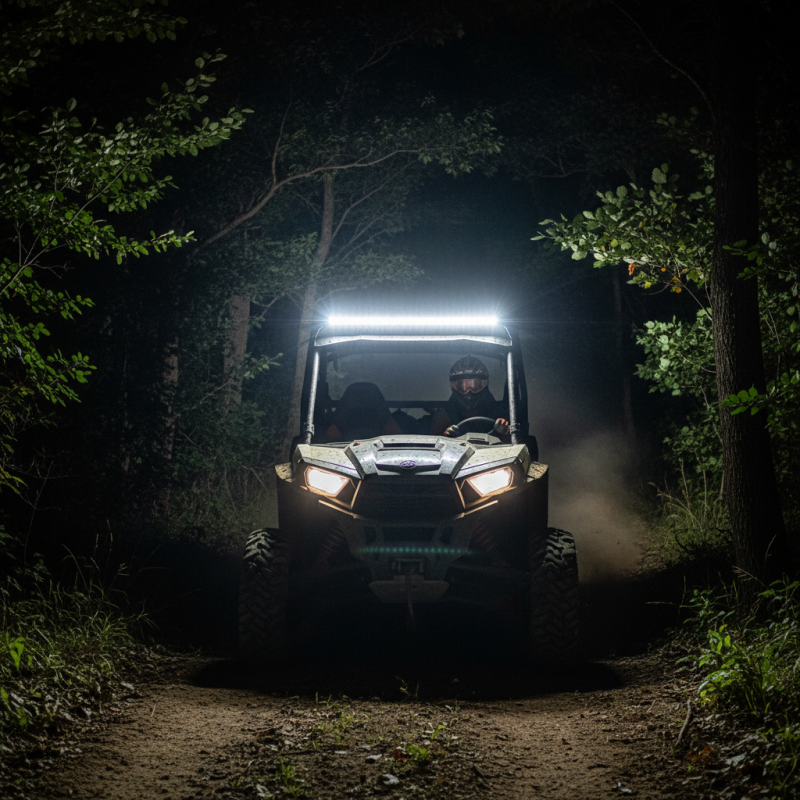
When off-roading, adequate lighting is crucial. UTV LED bar lighting enhances visibility and safety in rugged terrains. It allows drivers to see obstacles clearly, reducing the risk of accidents. Effective lighting improves depth perception, helping navigate tricky trails after sunset. Without it, even experienced off-roaders can struggle in low-light conditions.
Choosing the right UTV LED bar involves understanding beam patterns and brightness. Floodlights provide wide coverage, while spotlights focus intensely ahead. Evaluating the area you frequent plays a significant role. For example, dense forests require broader beams to illuminate nearby hazards. On the other hand, open deserts may benefit from focused beams. Skilled drivers know the difference and make informed choices.
Reflecting on personal experiences can guide UTV lighting decisions. Some drivers may have installed lights that were too bright or poorly aimed. This can cause glare, affecting visibility for others. Others have found that mismatched light output leads to ineffective illumination. Learning from these mistakes is essential for future purchases.
Key Factors to Consider When Choosing UTV LED Bar Wattage and Brightness
When selecting UTV LED bar lighting, wattage and brightness are crucial factors. Higher wattage often means more brightness, but it's not just about the numbers. A report from the Society of Automotive Engineers indicates that the ideal range for UTV LED lighting is typically between 20 to 100 watts. This range balances power and efficiency, ensuring optimal visibility on trails or during nighttime operations.
Consider the lumens output when evaluating brightness. A quality LED light can deliver around 100 lumens per watt. Hence, a 50-watt light should provide roughly 5000 lumens. This ensures you have sufficient light to navigate rough terrain safely. However, avoid overly bright lights that could blind other drivers. Keep in mind that brightness can sometimes lead to glare.
Tip: Assess your specific needs before choosing wattage. If you mostly ride in well-lit areas, lower wattage may suffice. Yet, for off-road adventures in complete darkness, prioritize higher wattage. Reflect on your typical riding conditions and adjust your choice accordingly. This will help you achieve a balance between visibility and power efficiency.
Evaluating Beam Patterns for Optimal Visibility and Performance
When choosing UTV LED bar lighting, evaluating beam patterns is crucial. Different beam configurations serve unique purposes, impacting visibility and performance. For instance, spot beams focus on longer distances, making them ideal for off-road adventures. Meanwhile, flood beams provide wide illumination, enhancing peripheral visibility. Selecting the right beam pattern can greatly affect nighttime driving safety.
Consider how light disperses. A poorly designed beam may create dark spots, which could be hazardous. Testing the lights in various conditions can reveal their strengths and weaknesses. Some lights may offer impressive brightness but fail to illuminate the ground adequately. Pay attention to the color temperature of the light; warmer temperatures can reduce glare while cooler temperatures may penetrate fog better.
Evaluating the mounting options is also important. Improperly mounted lights can alter the beam pattern. An adjustable mount might help achieve optimal positioning. Frequent adjustments for different terrains can be cumbersome, but they ensure better visibility. Think about how easy it is to modify the setup. This attention to detail will enhance your overall UTV lighting experience.
Top 10 Tips for Choosing the Best UTV LED Bar Lighting
| Tip Number | Tip Description | Beam Pattern Type | Optimal Usage | Brightness (Lumens) |
| 1 | Choose the correct beam pattern based on your needs. | Flood | Close range visibility | 3000 |
| 2 | Consider a combo beam for versatile lighting. | Combo | Mixed conditions | 5000 |
| 3 | Look for durable construction and weather resistance. | N/A | All environment | N/A |
| 4 | Select a brightness level suitable for your activities. | Spot | Long distance | 7000 |
| 5 | Assess the power consumption of the light bar. | N/A | Efficiency | N/A |
| 6 | Check the warranty and return policy. | N/A | Consumer protection | N/A |
| 7 | Evaluate mounting options for the light bar. | N/A | Installation flexibility | N/A |
| 8 | Research user reviews and ratings. | N/A | Real user experience | N/A |
| 9 | Verify compatibility with your UTV. | N/A | Fit and finish | N/A |
| 10 | Compare prices and features among different models. | N/A | Value for money | N/A |
Assessing Durability and Weather Resistance for UTV LED Bar Lights
When selecting UTV LED bar lights, durability and weather resistance are crucial factors. Lights will be exposed to harsh environments. Consider materials used in the construction. Options like aluminum or polycarbonate provide strength and protect against impacts. Waterproof ratings matter too. Look for lights with an IP68 rating. This ensures they can withstand heavy rain and dust.
It's important to assess the sealant quality. Poor seals can lead to moisture damage. Look for manufacturer information on the seals used. Some products might advertise ruggedness but fall short in real-world testing. While you may find attractive designs, practical durability should take precedence.
Testing the lights in typical UTV conditions can also reveal their true performance. Real-world usage often uncovers weaknesses that reviews may not indicate. Consider feedback from fellow riders who have faced similar terrain. Their experiences can guide your choice effectively. Selecting reliable lighting is an investment in safety and performance.
Installation and Compatibility: Ensuring Your LED Bar Fits Your UTV Model
When choosing an LED bar for your UTV, installation and compatibility are crucial. Poor fitment can lead to functionality issues or even damage. Data shows that up to 30% of aftermarket accessories fail due to improper installation. Ensuring your LED bar is compatible with your specific UTV model avoids these issues.
Start by checking your UTV’s electrical system. Many UTVs require specific voltage to power LED bars effectively. A report from the American Society of Automotive Engineers indicates that mismatched voltage can reduce LED lifespan by over 50%. It’s vital to review your UTV’s manual for electrical specifications before making a purchase.
Measure the mounting area accurately. Some models feature unique shapes or mounting points, making it essential to double-check the dimensions required. Users often overlook this step, leading to expensive returns. Additionally, consider the beam patterns and brightness levels that work best with your driving conditions. Ideal lighting should enhance visibility without blinding other drivers. Not every bar meets these essential criteria, making research crucial in selecting the right one.