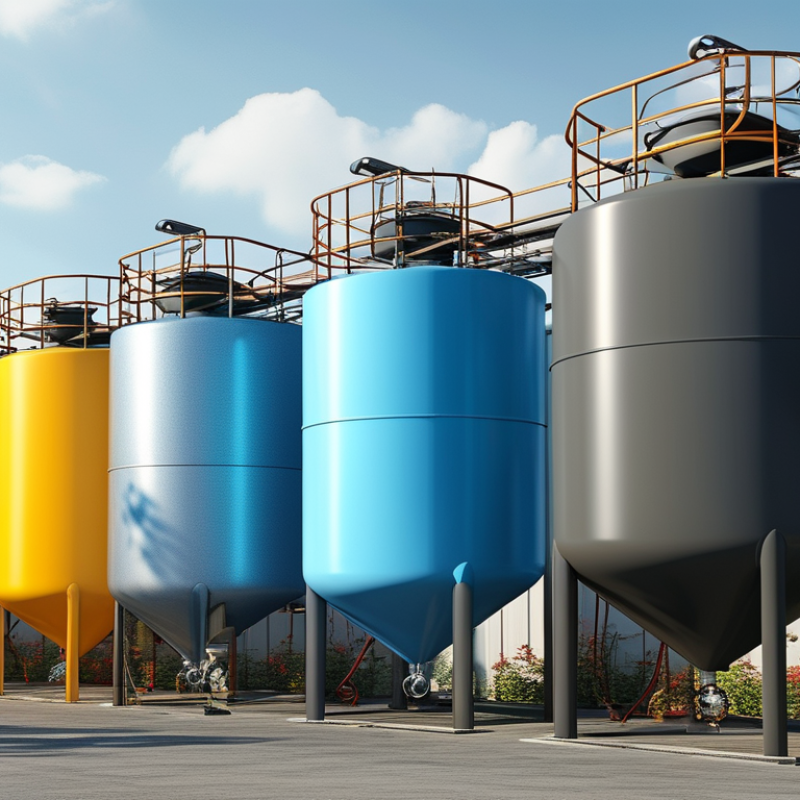
How to Choose the Right Industry Tank for Your Business Needs?
Choosing the right Industry Tank for your business can be challenging. The right selection impacts efficiency and productivity. You must consider various factors to make an informed decision.
Industry Tanks come in various sizes and materials. Assess your business's specific needs and constraints. Consider the fluid type, temperature, and storage capacity. An inappropriate tank can lead to costly damages. Understanding these aspects offers a clearer path.
Expert guidance plays a crucial role in this process. Consulting with industry professionals can help identify potential pitfalls. Your chosen tank should not only meet current needs but also adapt to future demands. A thoughtful selection process ensures reliability and longevity in operations.
Understanding the Different Types of Industry Tanks Available
When selecting an industry tank, understanding the various types available is crucial. Tanks come in different shapes, sizes, and materials, each serving unique purposes. For example, stainless steel tanks are popular for food and beverage sectors due to their hygiene and durability. In contrast, fiberglass tanks are often used in chemical industries thanks to their resistance to corrosion.
Another important consideration is tank capacity. A business focused on large-scale production will need a tank with a much larger capacity than a small workshop. Assessing your production needs can help avoid costly mistakes. Quite a few businesses realize too late that their tank size cannot accommodate their growth.
**Tip:** Always plan for the future. Choose a tank that allows room for expansion.
Lastly, tank customization can address specific business requirements. Features like insulation and specific fittings are essential for certain industries. However, be cautious. Custom solutions can lead to increased costs and longer lead times.
**Tip:** Research different suppliers and get multiple quotes.
Many businesses overlook regulatory compliance when choosing tanks, leading to costly adjustments. Ensure the tank meets industry standards and regulations.
Assessing Your Business Needs for Tank Capacity and Specifications
When assessing your business needs for tank capacity and specifications, several key factors come into play. The type of industry you operate in may dictate the necessary tank size and material. According to a recent report by the International Tank Institute, industries like food and beverage typically require high-grade stainless steel tanks due to strict hygiene standards. In contrast, chemical industries often use carbon steel tanks for durability and cost-effectiveness.
It’s crucial to evaluate your production volume. A small operation may not need large storage, while a high-volume business necessitates tanks with significant capacity. Consider that a standard 10,000-gallon tank is ideal for medium-sized operations but may be insufficient for large scale production, which can exceed 50,000 gallons. Custom tanks can provide tailored solutions but often come at a premium. Ensure your facility can accommodate the physical dimensions of the tank, as space constraints can significantly impact your choice.
Tips: Assess your current and future production needs. Oversized tanks can lead to unnecessary costs. Conversely, too small a tank might disrupt operations. Always factor in regulatory requirements. Inadequate compliance can lead to expensive penalties. Regularly revisiting your business goals and tank efficiency is vital to maintaining optimum operation.
How to Choose the Right Industry Tank for Your Business Needs?
| Industry Type | Tank Capacity (Gallons) | Material | Temperature Range (°F) | Application |
| Food & Beverage | 5000 | Stainless Steel | 32 - 212 | Storage & Processing |
| Chemical | 3000 | Polyethylene | -40 - 120 | Storage & Transport |
| Oil & Gas | 10000 | Carbon Steel | -20 - 150 | Reservoir & Processing |
| Pharmaceutical | 2000 | Glass Lined | 50 - 200 | Production & Storage |
| Water Treatment | 7500 | Fiberglass | 32 - 100 | Treatment & Distribution |
Evaluating Material Options for Durability and Safety Standards
Choosing the right tank for your business involves understanding materials. Durability and safety are two critical factors. Different materials have unique strengths and weaknesses. For instance, polyethylene tanks are resistant to corrosion and UV rays. They are lightweight and easy to handle, which can be advantageous for many businesses.
However, consider the potential drawbacks. Polyethylene tanks may not withstand extreme temperatures as well as metal options. Stainless steel tanks offer greater durability and longevity. They comply with high safety standards but are heavier and more costly. Assess your specific use cases carefully to find the best fit.
Another option is fiberglass. It is durable and corrosion-resistant but can be brittle. It requires careful handling. Take the time to evaluate each material's properties and your operational needs. Look for credible information and expert advice to make informed choices that will serve your business well in the long run.
Cost Considerations and Budgeting for Tank Acquisition
Budgeting for tank acquisition is crucial for any business. Understanding costs can help streamline decisions. According to a report by the Industrial Tank Market Analysis, costs can vary significantly. Estimates suggest that tanks can range from $5,000 to over $100,000, depending on the type and capacity needed. These figures can influence your budget profoundly.
When planning your budget, consider installation and maintenance. Installation can add another 20% to the initial cost. Regular maintenance is necessary to prolong tank lifespan. These ongoing expenses can accumulate, affecting your operational budget. Additionally, a recent study showed that businesses often underestimate these costs, leading to financial strain.
Fluid dynamics and storage capacity requirements can dictate the choice of tank type. Engage with industry experts to refine your selection. Their insights may reveal overlooked costs or savings. Remember, investing in the right tank not only secures resources but can also enhance efficiency over time. Thus, understanding all associated costs is essential for long-term success.
Maintenance and Compliance Factors in Tank Selection
Choosing the right industry tank can be a complex task. Maintenance and compliance are crucial factors to consider. Regular upkeep is essential for ensuring longevity and safety. Many businesses overlook this aspect and face costly repairs later. Understanding the specific maintenance requirements of a tank can help avoid such pitfalls.
Compliance with regulations is another vital consideration. Different industries have specific guidelines determining tank materials, design, and installation. Businesses should thoroughly research these regulations. Non-compliance can lead to severe penalties. It is also important to engage with local authorities. This connection might reveal additional requirements or recommendations.
Selecting a tank should involve a comprehensive assessment of maintenance needs and compliance standards. Relying solely on cost can be misleading. Evaluate the total cost of ownership, including maintenance and compliance expenses. A cheaper tank may lead to higher long-term costs if it requires excessive upkeep or fails to meet regulations. Remain vigilant in your selection process to safeguard your business’s future.