How to Choose the Right Ball End Mill for Your Project?
Choosing the right Ball End Mill is crucial for any machining project. The right tool can enhance your efficiency and precision. However, the options available can be overwhelming. Various factors can influence your decision. These include the material you are cutting, the desired finish, and the complexity of your design.
Different Ball End Mills serve distinct purposes. Some are best suited for smooth finishes, while others excel in intricate detailing. It’s vital to assess your project’s requirements carefully. Often, the nuances of a specific job may dictate the choice of a Ball End Mill.
Being aware of your preferences and limitations is essential. Sometimes, you might overlook a vital specification. This can lead to unsatisfactory results or wasted resources. Taking the time to reflect on your needs and possible options can make a significant difference in your project's outcome.
Understanding Ball End Mills and Their Applications
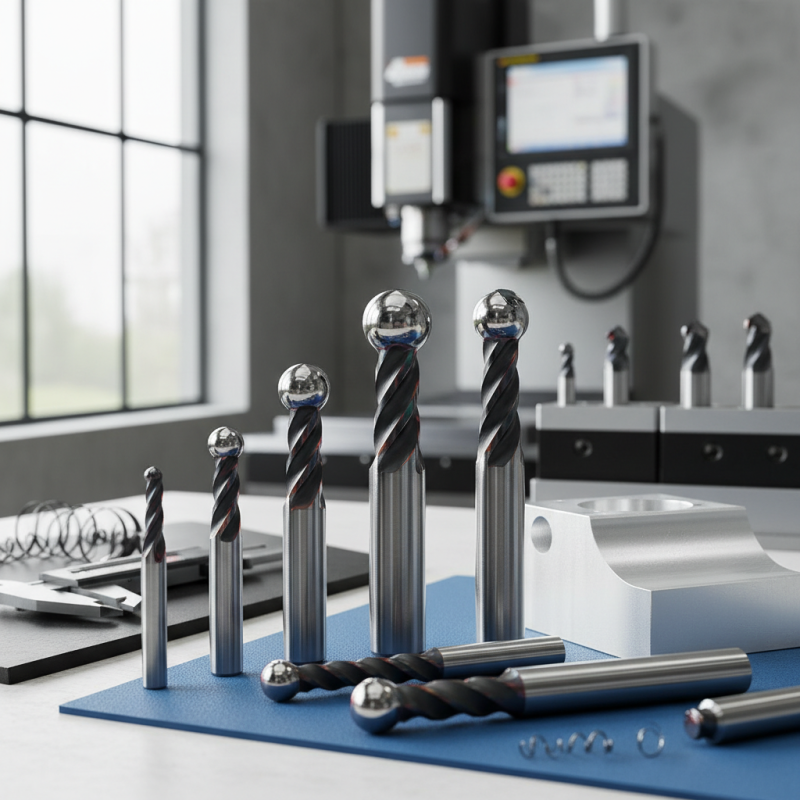
Ball end mills are crucial for many machining projects. They excel in creating curved surfaces and intricate shapes. Their rounded tips allow for smooth contouring of materials, providing a unique finish.
When selecting a ball end mill, consider the material you are working with. Different materials require different tools for effective machining. For instance, softer metals may need shorter tools, while harder materials demand sturdier designs. The diameter of the end mill also plays a vital role. A smaller diameter offers more precision for detailed work, while larger mills can remove material faster.
Understanding RPM and feed rate is essential. These factors greatly influence the tool's performance and lifespan. Experimenting with settings can lead to better outcomes. However, finding the perfect balance can be challenging. It's important to track the results and make adjustments as needed. Each project can present unique challenges that require different approaches with the ball end mill.
How to Choose the Right Ball End Mill for Your Project?
| Diameter (mm) | Flute Count | Coating Type | Material | Ideal Application |
| 6 | 2 | TiAlN | Carbide | Aluminum machining |
| 10 | 4 | ZrN | High-speed Steel | Plastic and wood |
| 12 | 3 | TiN | Carbide | Milling of curves and contours |
| 16 | 2 | AlTiN | Carbide | Stainless steel |
| 20 | 4 | Diamond | Ceramic | Composite materials |
Factors to Consider When Choosing a Ball End Mill
Choosing the right ball end mill is crucial for your project’s success. Many factors come into play when making this decision. One important aspect is the material of the workpiece. Different materials require different cutting tools. For hard metals, a more durable end mill is necessary. Conversely, softer materials may be machined with less robust tools.
Another key consideration is the diameter of the end mill. A larger diameter can remove more material but may not fit finer details. If your project involves intricate shapes, a smaller diameter is better. Additionally, think about the cutting speed and feed rate. Too high a speed can lead to tool wear. The wrong feed can result in poor surface finish. Reflect on the specifications of your machine as well.
Lastly, don't overlook the coating of the end mill. Some coatings reduce friction and increase tool life. Select coatings based on the materials you're working with. Remember that trial and error may be part of the process. Not every choice will be perfect, so be prepared to adjust your approach.
Material Compatibility and Ball End Mill Selection
Choosing the right ball end mill requires careful consideration of material compatibility. The milling process can significantly impact both the efficiency and quality of the finished product. For instance, using a cobalt alloy might reach up to 68 HRC on the hardness scale, necessitating high-speed steel tools for effective milling.
Different materials have unique properties that affect their machinability. For example, titanium and stainless steel, known for their toughness, require ball end mills with specific coatings. According to industry reports, coated tools can increase tool life by up to 200%. This is crucial in reducing downtime and increasing productivity. However, misalignment in choosing coatings may lead to tool wear and project delays.
Not all materials are compatible with every end mill design. For softer materials like aluminum, a higher speed and feed rate is beneficial. Yet, applying the same settings to harder materials could cause tool failure. Manufacturers often report that understanding these nuances is key. A disconnect in material knowledge can lead to costly mistakes. Overall, careful selection based on material compatibility brings significant improvements in efficiency and end product quality.
How to Choose the Right Ball End Mill for Your Project?
This chart represents the material compatibility scores for different materials when using a ball end mill. The scores indicate how suitable each material is for machining with ball end mills, helping you make an informed decision based on your project requirements.
Measuring and Sizing Your Ball End Mill Needs
When selecting a ball end mill, measuring and sizing your needs is crucial. Start with material type. Different materials require various cutting tools. A softer material might require a different type of end mill than a harder one. If you’re working with steel, for example, consider the hardness and grain structure.
Next, focus on diameter. The diameter affects the detail level you can achieve. A smaller diameter creates finer details but may reduce stability. Conversely, a larger diameter provides stability but can limit detail. Aim for a balance according to your project's needs. Use calipers for precise measurements of the workpiece. This accuracy is key to a successful outcome.
Depth of cut is another important factor. It impacts the load on the mill and the effectiveness of the machining operation. If the depth is too great, it can lead to tool breakage. If it's too shallow, it may not remove enough material efficiently. It's a delicate balance, often requiring some trial and error. Consider your machine's capabilities too, as they play a significant role in the performance of the end mill.
Tips for Optimizing Performance with Ball End Mills
Choosing the right ball end mill can make a difference in your machining projects. To optimize performance, consider several key tips that enhance tool life and precision.
Start by selecting the right diameter. A larger diameter can provide more stability and rigidity but may not fit into tighter spaces. Then, think about the material you'll be cutting. Different materials require different cutting speeds and feeds. If you push the limits too hard, you risk damage.
Also, remember the cutting edge's coating. Coatings can improve wear resistance and reduce friction. Be mindful of the angle as well. A wrong angle can lead to undesirable finishes. Ensure your end mill is sharp; a dull tool creates more heat, damaging both the tool and material. Balance these factors to achieve optimal results.
Proper setup is crucial. Stability plays a vital role in accuracy. Check that the workpiece is secure. Even slight vibrations can lead to poor results. Always test on scrap material first. This allows for adjustments without wasting valuable resources.