
How to Choose the Best Off Road Snow Tires?
Choosing the best off road snow tires requires more than checking a rugged tread pattern. Snow, ice, mud, and frozen gravel demand different kinds of grip. A tire that performs confidently on a mountain trail may feel noisy or unstable on cleared pavement. That trade-off matters.
Start with your vehicle, route, and winter habits. Check the manufacturer’s tire size, load rating, and speed rating before comparing models. Then examine the tread depth, sipe design, rubber compound, and sidewall protection. Deep, open grooves can clear packed snow and slush, while dense sipes create more biting edges on icy surfaces. However, an aggressive tread does not automatically provide safer braking. It may also reduce fuel economy and increase road noise.
Look for independent testing, verified owner experiences, and guidance from qualified tire professionals. The three-peak mountain snowflake symbol can indicate tested severe-snow performance, but it does not guarantee excellent traction on every trail. Tire pressure also deserves attention. A small adjustment may improve contact on loose terrain, yet lowering pressure too far can damage the sidewall or unseat the tire. That risk is easy to underestimate.
Think beyond appearance. Inspect the tire’s age, warranty, puncture resistance, and replacement availability in your region. Carry a pressure gauge and check tread condition regularly. No single model wins everywhere. Your first choice may need revision after one winter season. Real driving conditions often expose assumptions that product descriptions hide. Reliable selection comes from matching tested performance with your vehicle, climate, and actual off-road use.
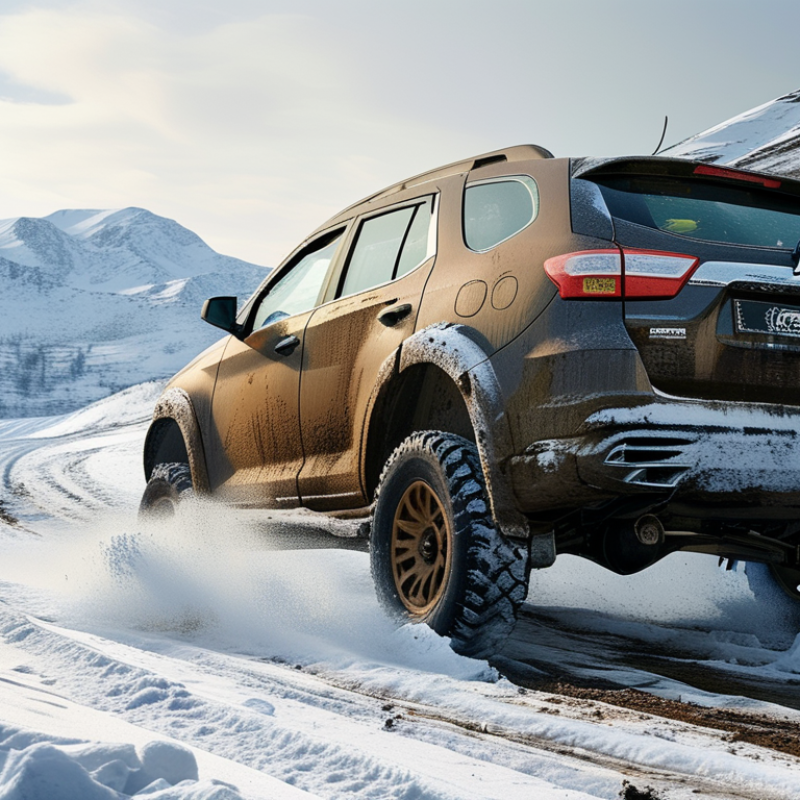
Define Your Off-Road Driving Conditions and Snow-Tire Needs
Choosing the Best Off-Road Snow Tires
Your driving conditions should guide every tire decision. Deep powder needs open tread patterns that clear snow without clogging. Packed snow and ice demand many small sipes for extra biting edges. Frozen gravel adds another problem: sharp stones can damage weak sidewalls.
Think about your typical route, not an imagined adventure. A forest road with ruts, steep climbs, and exposed roots needs strong sidewalls and suitable load capacity. Frequent highway travel requires stable handling and controlled road noise. Check the tire’s severe-snow certification, size, load rating, and speed rating before buying. Those details matter more than aggressive-looking tread.
I once focused too much on tread depth and ignored sidewall protection. That was a costly mistake in rough terrain. Tire pressure also changes performance. Lower pressure can improve traction on soft snow, but excessive reduction may damage the tire or wheel. Use the vehicle maker’s guidance, then make small adjustments in safe conditions. Carry a pressure gauge and inspect the sidewalls after every remote trip.
No tire replaces preparation. Examine weather forecasts, road access, recovery equipment, and daylight. If your route includes frequent ice, deep snow, and rocky tracks, one tire may involve compromises. Measure stopping distance on a quiet, safe surface. Real conditions can challenge the best specifications.
How to Choose the Best Off Road Snow Tires? - Define Your Off-Road Driving Conditions and Snow-Tire Needs
| Off-Road Driving Condition | Typical Surface and Environment | Recommended Tire Category | Key Tread and Construction Features | Traction Priority | Important Selection Considerations |
|---|---|---|---|---|---|
| Plowed roads with occasional snow | Mostly paved roads with compacted snow, slush, and intermittent ice. Snowfall is usually cleared quickly. | Severe-snow-rated all-terrain | Open shoulder blocks, numerous biting edges, flexible cold-weather compound, and reinforced sidewalls. | Balanced wet, snow, and dry-road performance | Choose a tire with the three-peak mountain snowflake marking when severe winter performance is required. Avoid an extremely aggressive tread if most driving is on pavement because it can increase noise and reduce road efficiency. |
| Deep, unplowed snow | Loose snow commonly deeper than the tire’s lower sidewall, with rutted access roads and limited snow removal. | Aggressive severe-snow all-terrain | Wide voids between tread blocks, self-cleaning grooves, staggered shoulders, strong casing, and pronounced lateral edges. | Forward flotation and self-cleaning ability | Confirm that the vehicle has sufficient ground clearance. Tire width alone does not guarantee better flotation; tread design, inflation pressure, vehicle weight, and snow depth all affect performance. |
| Packed snow and frequent ice | Hard-packed snow, polished intersections, frozen trails, and icy uphill sections. | Dedicated winter tire Stud-capable winter tire |
High sipe density, soft cold-weather rubber, many small tread blocks, and optional metal studs where permitted. | Ice grip and braking control | Dedicated winter tires generally provide better cold-weather grip than all-terrain tires. Studs can improve traction on glare ice but may be restricted by local regulations and can damage some road surfaces. |
| Rocky trails with snow and ice | Sharp rocks, uneven ledges, frozen mud, exposed gravel, and low-speed technical terrain. | Severe-snow all-terrain Light-truck construction |
Cut- and chip-resistant compound, reinforced sidewall, strong bead area, stone ejectors, and flexible but durable tread blocks. | Sidewall protection and controlled climbing traction | Check the tire’s load range and construction type against the vehicle’s required load. A very stiff casing can resist damage but may reduce ride comfort and small-bump grip. |
| Muddy forest roads that freeze in winter | Soft mud, frozen ruts, thaw-freeze cycles, and mixed dirt, snow, and wet grass. | Mud-terrain with winter rating Aggressive all-terrain |
Large staggered lugs, open channels, self-cleaning voids, reinforced shoulders, and a compound that remains flexible in low temperatures. | Cleaning mud without sacrificing snow grip | Many mud-terrain tires are not designed for severe winter use. Verify winter certification rather than assuming that an aggressive tread will perform well on ice or packed snow. |
| High-speed highway travel to remote trails | Long paved-road distances followed by snowy gravel roads and moderate off-road sections. | Severe-snow all-terrain | Stable center rib, balanced block arrangement, low tread squirm, strong casing, and dense siping. | Directional stability, braking, and low noise | Look for the correct speed rating, load index, and approved size. Rotate tires according to the vehicle manufacturer’s schedule to maintain even wear. |
| Very cold regions | Regular temperatures below approximately 7°C (45°F), with snow, ice, and frozen road surfaces. | Dedicated winter tire | Low-temperature rubber compound, dense siping, flexible tread blocks, and a tread pattern designed for snow evacuation. | Cold-weather flexibility and braking | Rubber hardens as temperatures fall. A tire that performs well in warm conditions may lose winter grip even when its tread depth appears adequate. |
| Mixed winter and summer off-road use | One set of tires must handle snow, gravel, dirt, rain, and warm-weather highway driving. | All-terrain tire with severe-snow rating | Moderately open tread, all-season durability, siping, reinforced sidewalls, and a compound suitable for a broad temperature range. | Versatility and service life | This is a compromise choice. It is more versatile than a dedicated winter tire but may provide less ice braking, while also being quieter and more pavement-friendly than a mud-terrain tire. |
| Low-pressure trail driving | Loose snow, sand-like snow, rocks, and technical trails where drivers reduce pressure for additional contact area. | Light-truck all-terrain Winter-rated off-road tire |
Strong sidewalls, durable bead construction, flexible casing, and tread blocks that maintain grip at reduced pressure. | Durability and contact-patch control | Use only the pressure range recommended by the tire and vehicle manufacturers. Reinflate before highway travel; reduced pressure can cause heat buildup, handling changes, and tire damage at speed. |
| Heavy vehicle or frequent towing | Loaded SUVs, pickups, trailers, steep snowy grades, and frequent equipment or cargo transport. | Load-appropriate severe-snow tire | Correct load index, robust casing, reinforced sidewalls, stable tread blocks, and reliable braking traction. | Load control and stable handling | Never exceed the vehicle, wheel, or tire load limits. Compare the tire’s load index with the actual axle loads, especially when carrying cargo or towing. |
| Remote travel with limited roadside support | Long distances from service facilities, sharp debris, snow-covered gravel, and risk of sidewall damage. | Durable severe-snow all-terrain | Reinforced sidewalls, puncture-resistant construction, strong bead protection, and a full-size matching spare. | Reliability and damage resistance | Inspect tread, sidewalls, valve stems, and spare-tire pressure before departure. Carry a repair kit, inflation equipment, and recovery gear suitable for the vehicle. |
Related Posts
-
2026 Best Vehicle Tires for Every Driving Condition?
-
Why Choosing the Right Van Tyres is Essential for Your Vehicle Performance?
-
How to Choose Premium Traction Tires for Your Vehicle?
-

Top Tips for Choosing the Best Tire Shop in 2026?
-

Experience Unmatched Performance with Our Premium Sport Tires for Every Driving Enthusiast
-
Top 5 Best All Terrain Tires for Ultimate Off-Road Performance in 2023