
2026 Top Inflatable Raft Boat Types for Global Buyers
Global buyers are entering a more demanding inflatable boating market. Grand View Research and Fortune Business Insights both identify steady expansion in inflatable boat demand, driven by tourism, fishing, rescue operations, and recreational water access. Their estimates differ because product definitions vary. That difference matters. A compact tender is not the same as a whitewater raft.
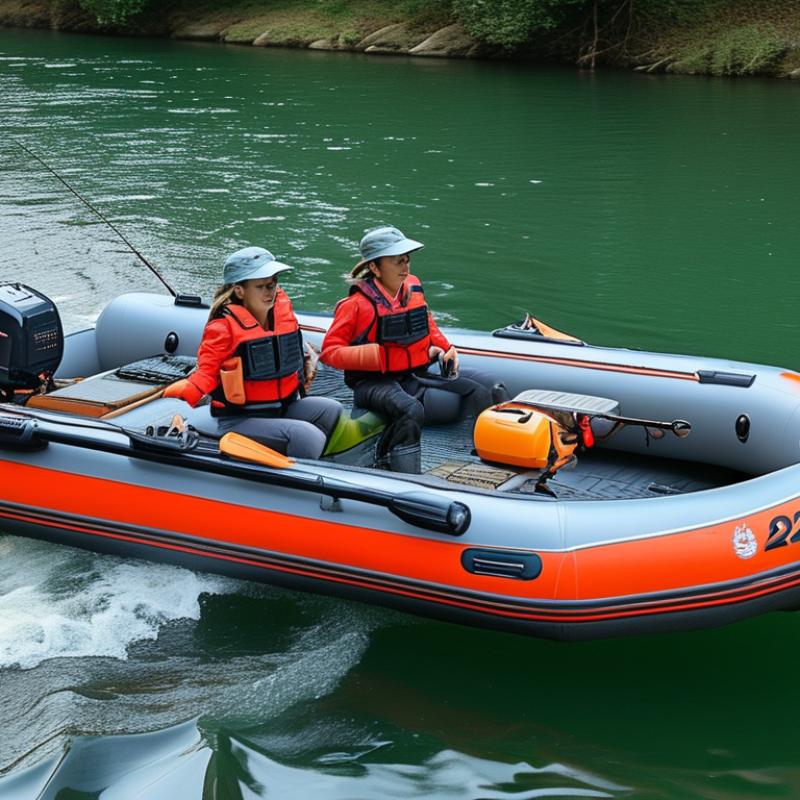
The 2026 market includes several practical types. High-pressure air-deck models suit yacht tenders and family transport. Self-bailing boats support river users who face continuous splash and drainage needs. Rigid inflatable boats, or RIBs, offer stronger hull performance for coastal patrol, diving, and commercial work. Lightweight roll-up designs remain attractive to buyers who carry equipment in a vehicle. Fishing-focused models add rod holders, reinforced floors, and mounting points for small outboards.
Real-world selection requires more than comparing advertised length. A 3.6-meter boat may carry four people, yet four adults with fuel and safety equipment can quickly approach its usable load limit. Check ISO 6185 classifications, manufacturer capacity plates, fabric specifications, valve quality, repair support, and regional certification requirements. The NMMA’s 2024 U.S. Recreational Boating Statistical Abstract reported strong economic activity across recreational boating, confirming the sector’s broader commercial importance. However, national demand does not guarantee suitability in every climate.
Cold storage, intense sunlight, rocky shorelines, and limited spare parts can change ownership costs. This guide compares leading Inflatable Raft Boat types for global buyers. No ranking is perfect. Buyer priorities often conflict. The best boat is usually the one that matches its water, workload, transport method, and maintenance reality.
What Defines an Inflatable Raft Boat in 2026
In 2026, an inflatable raft boat means more than a soft hull and portable air pump. It combines buoyancy, controlled flexibility, and dependable safety features. Modern designs commonly use reinforced PVC or coated fabrics. Some premium constructions use drop-stitch floors for firmer footing. These materials resist abrasion, sunlight, and repeated folding, but they still need careful storage.
A practical raft should have several independent air chambers. One puncture should not remove all flotation. Reliable valves, welded seams, and visible pressure guidance matter during setup. Field inspections also examine floor stiffness, grab lines, drain openings, and oarlock security. A self-bailing floor can release spray quickly, especially on fishing trips or moving water. However, “self-bailing” does not mean the boat stays dry in every condition.
Capacity ratings deserve close attention. They should include passengers, fuel, equipment, and emergency supplies. Overloading changes stability and stopping distance. Buyers should compare test documents, material thickness, repair procedures, and replacement-part access. Regional standards may differ, so published evidence is more useful than attractive photographs. I still question some advertised load figures because testing conditions are rarely explained clearly. Small details matter. A cold morning can reduce air pressure. A rough shoreline can expose weak fabric. Experienced users check the raft before every launch, even when the boat looks nearly new.
2026 Top Inflatable Raft Boat Types for Global Buyers - What Defines an Inflatable Raft Boat in 2026
A practical comparison of common inflatable raft boat categories, typical specifications, construction features, and buying considerations.
| Inflatable Raft Type | Primary Use | Typical Length | Typical Capacity | Typical Load Rating | Common Construction | Typical Air Pressure | Main Advantages | Key Buyer Check |
|---|---|---|---|---|---|---|---|---|
| Recreational River Raft | Calm rivers, lakes, family recreation, and short day trips | 2.4–4.3 m | 2–6 people | 200–600 kg | Woven PVC or reinforced synthetic fabric with multiple air chambers | Approximately 0.20–0.35 bar for the main tubes | Easy to transport, stable, affordable, and suitable for casual users | Tube diameter, floor rigidity, drain design, and stated load capacity |
| Self-Bailing Whitewater Raft | Whitewater rafting, guided trips, and technical river use | 3.0–6.1 m | 4–12 people | 450–1,200 kg | Heavy-duty coated fabric, reinforced seams, raised inflatable floor, and drain holes | Approximately 0.20–0.35 bar for tubes; floor pressure may be higher | Fast water drainage, high buoyancy, impact resistance, and good stability | Tube diameter, seam reinforcement, floor design, repairability, and rescue features |
| Expedition Raft | Multi-day river expeditions, remote travel, and equipment transport | 4.0–6.7 m | 6–14 people | 700–1,500 kg | Thick reinforced PVC or rubber-coated fabric with heavy-duty abrasion protection | Approximately 0.20–0.35 bar | High payload, large interior volume, durable exterior, and multiple tie-down points | Floor protection, cargo attachment points, repair kit, spare-valve compatibility, and packed size |
| Inflatable Fishing Raft | Freshwater fishing, slow-moving rivers, and near-shore angling | 2.4–4.6 m | 1–4 people | 180–650 kg | Reinforced PVC or synthetic fabric with an inflatable or rigid-insert floor | Approximately 0.20–0.35 bar; high-pressure floors may use higher pressure | Quiet operation, good stability, storage options, and compatibility with fishing accessories | Rod holders, seat layout, floor stability, motor rating, and corrosion-resistant fittings |
| Inflatable Dinghy or Tender | Boat tendering, marina transfers, short coastal trips, and ship-to-shore transport | 2.0–4.2 m | 2–6 people | 200–800 kg | Woven PVC or CSM-coated fabric with inflatable keel and slatted, air, or rigid floor | Approximately 0.20–0.35 bar for tubes; inflatable keel may use a higher pressure | Compact storage, quick launching, good stability, and compatibility with small outboards | Maximum motor power, transom construction, lifting points, drain plug, and load rating |
| Inflatable Cataraft | Whitewater, fishing, river touring, and lightweight expedition transport | 3.0–5.5 m | 1–4 people | 300–900 kg | Two separate inflatable tubes connected by a frame, with an open or mesh deck | Approximately 0.20–0.35 bar | Low draft, efficient tracking, modular frame design, and excellent cargo access | Frame strength, tube spacing, load distribution, oar mounts, and transport dimensions |
| Packraft | Hiking, lake crossings, lightweight touring, and remote-access recreation | 1.8–3.0 m | 1–2 people | 120–250 kg | Lightweight coated nylon or similar technical fabric with a small inflatable chamber | Usually approximately 0.03–0.10 bar, depending on design | Very low packed weight, compact storage, and easy deployment without a powered pump | Pack weight, fabric denier, seat comfort, spray deck, repair system, and user weight limit |
| Inflatable Rescue Raft | Emergency response, flood rescue, safety operations, and professional water access | 2.8–5.5 m | 4–12 people | 500–1,500 kg | High-visibility reinforced fabric with multiple chambers, grab lines, handles, and lifting points | Approximately 0.20–0.35 bar | High buoyancy, rapid deployment, strong visibility, and adaptable passenger access | Applicable local safety standards, visibility, lifting points, chamber redundancy, and inspection access |